What Are LSI Keywords and How to Find Them for Higher Google Rankings
If you’ve ever struggled to make your content stand out on Google, you’re not alone. Many creators still rely on repeating the same keyword over and over, hoping it boosts rankings. But here’s the truth: Google in 2025 is much smarter than that. Search engines now look for context, depth, and signals of topical expertise. That’s where LSI keywords come in. By naturally weaving in related terms, you give Google more clarity about your content’s intent, while also keeping readers engaged. In this guide, you’ll learn exactly what LSI keywords are, why they matter, and how to find and use them effectively.
And if you want an even deeper understanding of boosting your content’s relevance, you can also explore my complete on-page SEO guide, which ties everything together for stronger rankings.
REQUEST YOUR FREE ON-PAGE SEO AUDIT
Is your website struggling to rank on Google? Don’t guess what’s wrong, find out exactly what’s holding you back. My free on-page SEO audit gives you a complete breakdown of your website’s strengths, weaknesses, and actionable improvements you can implement immediately.
What Are LSI Keywords?
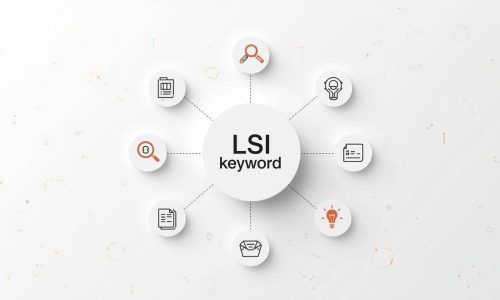
LSI keywords, or Latent Semantic Indexing keywords, are words and phrases closely related to your main topic. They help search engines understand your content’s context, making it easier to rank higher on Google.
When you use LSI keywords, you’re giving search engines extra clues about what your content really covers. For example, if your main keyword is “apple,” LSI keywords might include “fruit,” “orchard,” or “nutrition.” This clarifies whether you’re talking about technology or food. It prevents confusion both for search engines and for your readers.
What Is Latent Semantic Indexing (LSI)?
Latent Semantic Indexing is a method search engines use to recognize relationships between words and concepts. Instead of looking at just one keyword, LSI scans the surrounding context to understand meaning more accurately.
You’ve probably noticed how one word can mean different things depending on the context. That’s where Latent Semantic Indexing steps in, it helps search engines reduce this confusion.
For you as a content creator, this means you don’t need to repeat the same keyword endlessly. Search engines are smart enough now to look at related terms thanks to LSI. When you naturally weave in contextually related words, your writing feels smoother while still signaling relevance to search engines.
What Is Latent Semantic Analysis (LSA)?
Latent Semantic Analysis (LSA) is a mathematical technique used to study how words relate to each other in context. In simple terms, it looks at patterns in large collections of text to understand meaning beyond single keywords.
Instead of focusing only on the exact match of a word, LSA groups words that often appear together and identifies their semantic relationship. This way, a search engine can recognize that “car” and “automobile” share a close meaning, even when the word choice differs.
What makes LSA powerful is how natural it allows your writing to become. You no longer need to stuff keywords into every second sentence, hoping Google will notice. Instead, by sprinkling related concepts and phrases in your content, you show expertise and give readers real value. Search engines pick up on these signals and reward your content with better visibility.
LSA might sound technical, but you don’t have to understand the algorithms behind it to benefit. All you need to know is that offering variety in your vocabulary and including naturally related terms helps both search engines and your audience.
Does Google Use LSI in Their Algorithm?
Google does not actually use Latent Semantic Indexing in its algorithm, despite what many guides still claim.
Google never admitted to using Latent Semantic Indexing as a ranking factor. The algorithm powering Google Search in 2025 is far more advanced than basic LSI. Instead of simply scanning for related terms, it uses artificial intelligence models like BERT and other language-processing systems to understand context.
So, why does the term “LSI keywords” still matter? While LSI itself isn’t used, the idea behind it (providing search engines with context) is still vital. When you include contextually relevant words and phrases in your content, search engines can better understand your page’s intent. This leads to clearer indexing and higher chances of matching user searches.
How To Find LSI Keywords?
Google Autocomplete
One of the fastest ways to discover related keywords is by using Google’s own autocomplete feature. Every time you start typing a query into Google Search, the search bar suggests phrases people often use. These suggestions are gold for uncovering real search intent.

To use autocomplete for finding LSI keywords:
- Type your primary keyword slowly into Google’s search bar.
- Pay attention to the drop-down suggestions that appear automatically.
- Note down phrases closely related to your topic.
- Try adding modifiers such as “best,” “guide,” or “near me” to see new ideas.
For example, if your main keyword is digital marketing, Google might suggest digital marketing strategy, digital marketing tools, or digital marketing benefits. Each suggestion reflects what real people commonly search for. By sprinkling these terms naturally into your content, you help Google understand your specific angle on the broader subject.
The advantage of autocomplete in 2025 is that it adapts to trending terms. That means you don’t just get static results but up-to-date reflections of what people are asking right now.
Google Related Searches
Scroll to the bottom of a Google results page and you’ll see “Searches related to…” or “people also search for” suggestions. This powerful feature helps you identify LSI keywords that your potential readers are actually looking for.
To take advantage of related searches:
- Enter your target keyword into Google and hit search.
- Scroll down to the bottom of the page.
- Look at the list of suggested related search terms.
- Gather the ones that connect strongly to your content’s topic.
For instance, if you search for healthy breakfast, you might find related searches like high-protein breakfast, quick breakfast recipes, or breakfast ideas without eggs. Each of these suggests common variations or associated concepts your readers care about.
These related searches can also guide you to build future content ideas and expand your topic coverage. When you create content around several related terms, Google sees that you’re offering depth, not just a single keyword repetition. This leads to higher topical authority.
Bold Terms in Google Snippet Descriptions
When you search for something on Google, notice how certain words appear in bold in the snippet descriptions. These bolded terms highlight what Google thinks is strongly connected to your search. That means they’re excellent candidates for LSI keywords.
Here’s how you can use them:
- Perform a Google search with your main keyword.
- Look through the snippets in the search results.
- Identify recurring words or phrases Google highlights in bold.
- Add fitting ones naturally into your content.
For example, if you search for SEO tools, you might see bold phrases like analytics, keyword research, and rank tracking. These terms are not random. They are concepts Google associates directly with SEO tools.
By including these bold-highlighted terms in your work, you’re sending signals that align with Google’s understanding of the topic. Just remember: don’t stuff them in; use them naturally to improve readability.
Google Keyword Planner
Google Keyword Planner is a free tool inside Google Ads that provides in-depth keyword data straight from Google itself. Even though it’s meant for advertising, it remains one of the best free sources for content creators too.
To find LSI keywords with Keyword Planner:
- Create a free Google Ads account if you don’t have one.
- Go to Keyword Planner and choose “Discover new keywords
- Enter your main keyword into the search field.
- Review the list of related keyword ideas Google suggests.
- Focus on terms with mid-level competition and clear contextual relevance.
For example, entering fitness app may deliver related terms like workout tracker, calorie counter, and exercise planner. Each represents a potential LSI keyword you can integrate into your article.
The bonus with Keyword Planner is that you also see average monthly searches and competition scores. This allows you to prioritize terms that not only make sense thematically but also drive meaningful traffic.

Google Image Tags
Not many people think of Google Images as a keyword tool, but it’s surprisingly useful. When you search for an image, Google often suggests tag-like words at the top of the screen. These tags are highly connected to your original keyword and work as strong LSI keyword inspiration.
Here’s a step-by-step way to use them:
- Go to Google Images and type in your target keyword.
- Look at the row of clickable tags right under the search bar.
- Collect the most relevant terms shown in those tags.
- Use them strategically in your content where they naturally fit.
For example, searching content marketing in Google Images might bring up tags like strategy, social media, examples, or templates. Each of these provides a new angle you can emphasize, making your article more comprehensive.
The real benefit here is how visual connections help to discover terms you may overlook with text-only searches. This expands the variety of related concepts you can cover without forcing repetition.
How to Use Latent Semantic Indexing Keywords
The best way to use LSI keywords is to weave them into your content where they make sense. You don’t need to force them into every paragraph. Instead, use them to provide variety, improve readability, and show that you understand the subject in depth. For instance, if you write about “digital marketing,” including words like “strategy,” “automation,” or “customer engagement” gives more clarity to both readers and search engines.
Another smart way to apply LSI keywords is in headings and subheadings. This not only improves scannability but also highlights context at a glance. Google’s crawlers pay special attention to these sections, so mixing in related terms strengthens your relevance.
Don’t forget to use LSI keywords in meta descriptions, image alt text, and even FAQ sections. These are small but powerful opportunities to send contextual signals that boost topical authority. Every place where you add natural variety helps Google connect your content to the right search queries.
DOWNLOAD YOUR FREE SEO GUIDE + TEMPLATE
Struggling to get your website noticed on Google? Download my free, beginner-friendly SEO guide + checklist template. In just 6 simple steps you’ll learn how to choose the right keywords, optimize your site with on-page optimization and track results.